
Academic
Design BA Thesis
Project
Wearable Computers
Challenge
Through an extensive interrogation of human flourishing, progress, social dynamics, game theory, and the evolution of computers, it became clear that rethinking the physical forms of daily devices can lead to a healthier and more present society, where people and computers act in concert with one another. This project offers a glimpse into the near future where computers are not addictive, where they don't force bad posture, and where they take into account human strengths as well as weaknesses while being contextually aware and helpful.
Solution




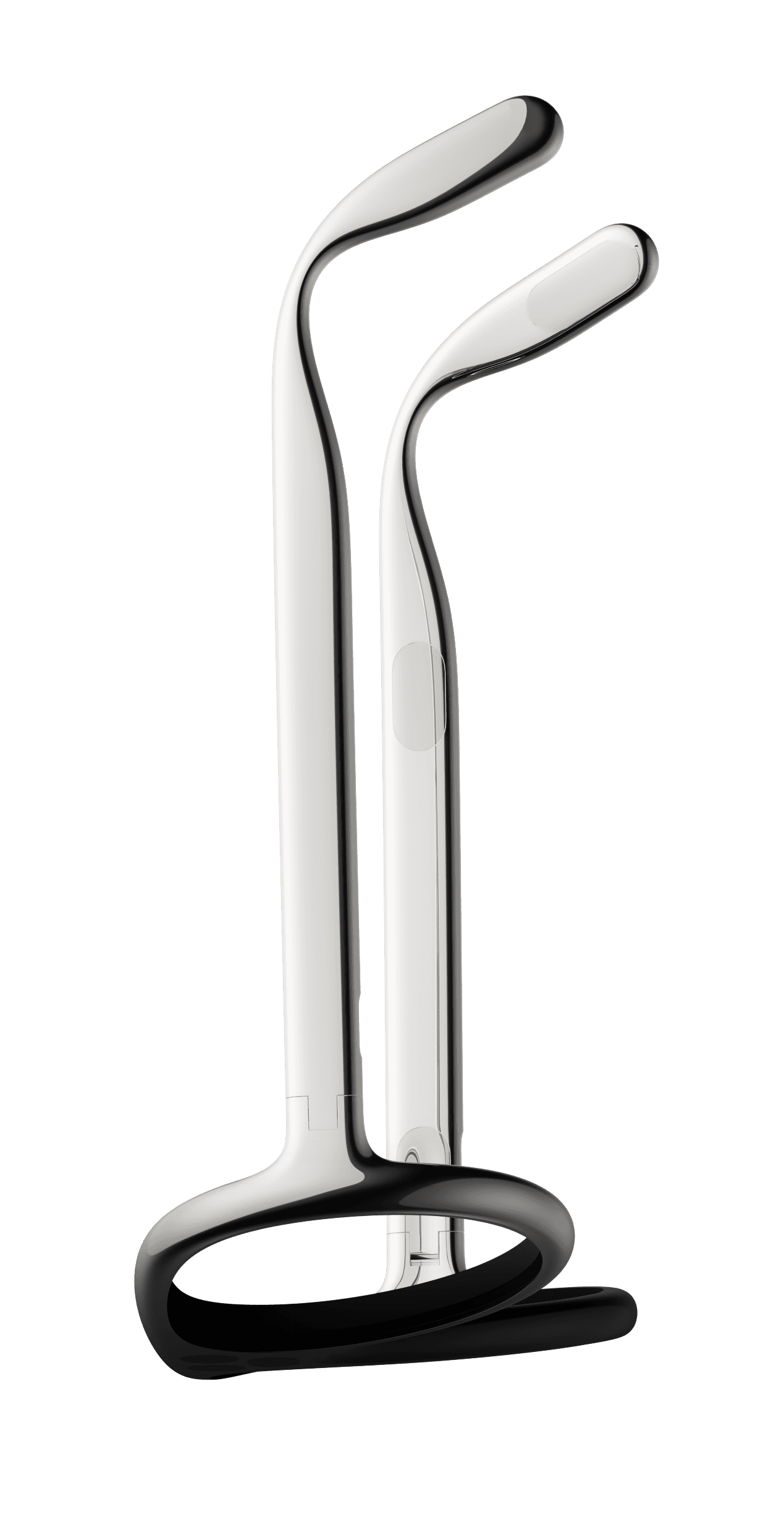


Swipe to see images
N°1
Ring
It's the first stage of immersion — always on, always ambient. As the most minimal wearable computer, it is designed to be worn constantly. It does not alter the wearer's reality at all.
Ring is purely an input device. It tracks biometrics, and the wearer can whisper thoughts and commands into it. A haptic motor provides the only output: a subtle confirmation that the system heard you.
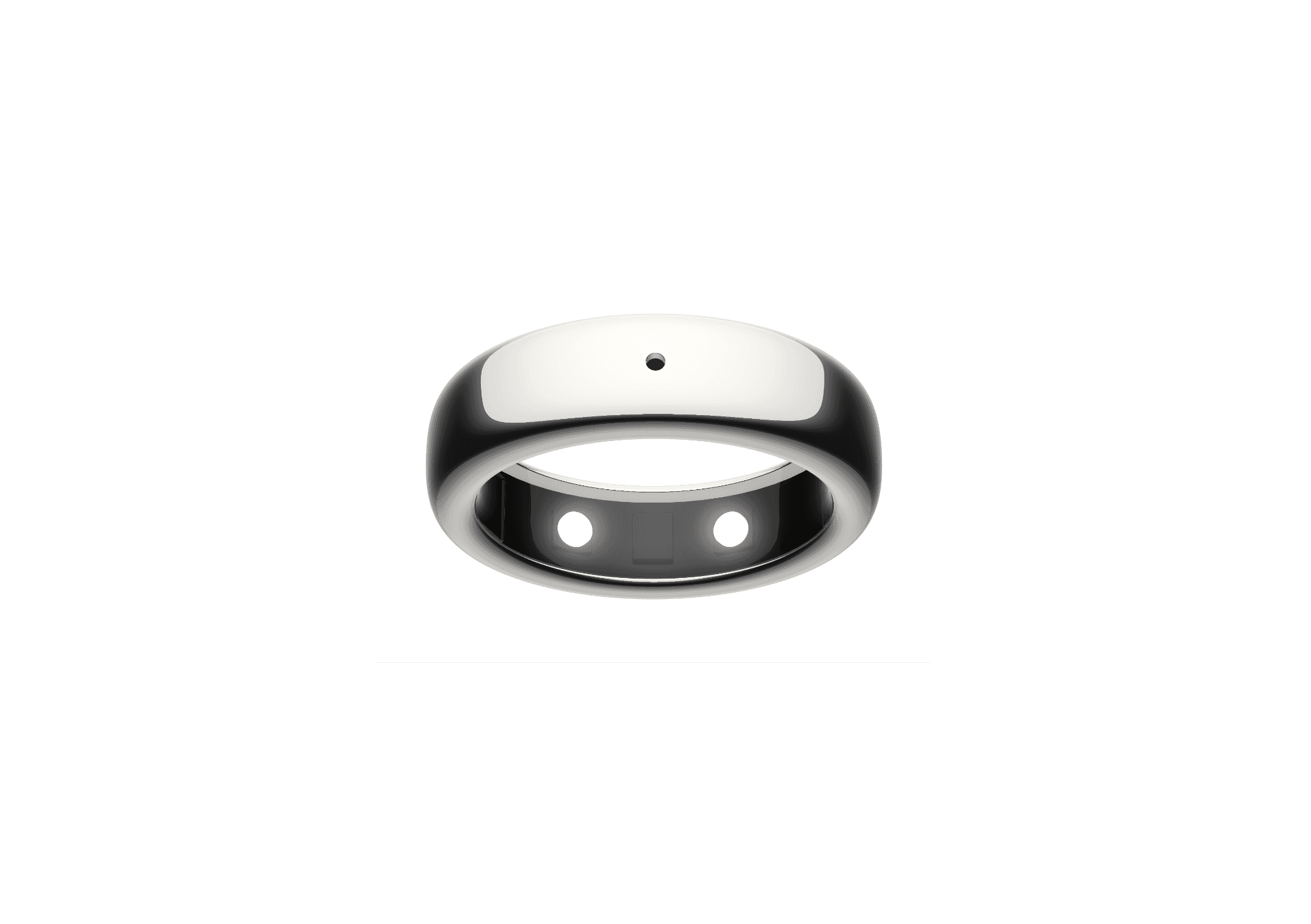
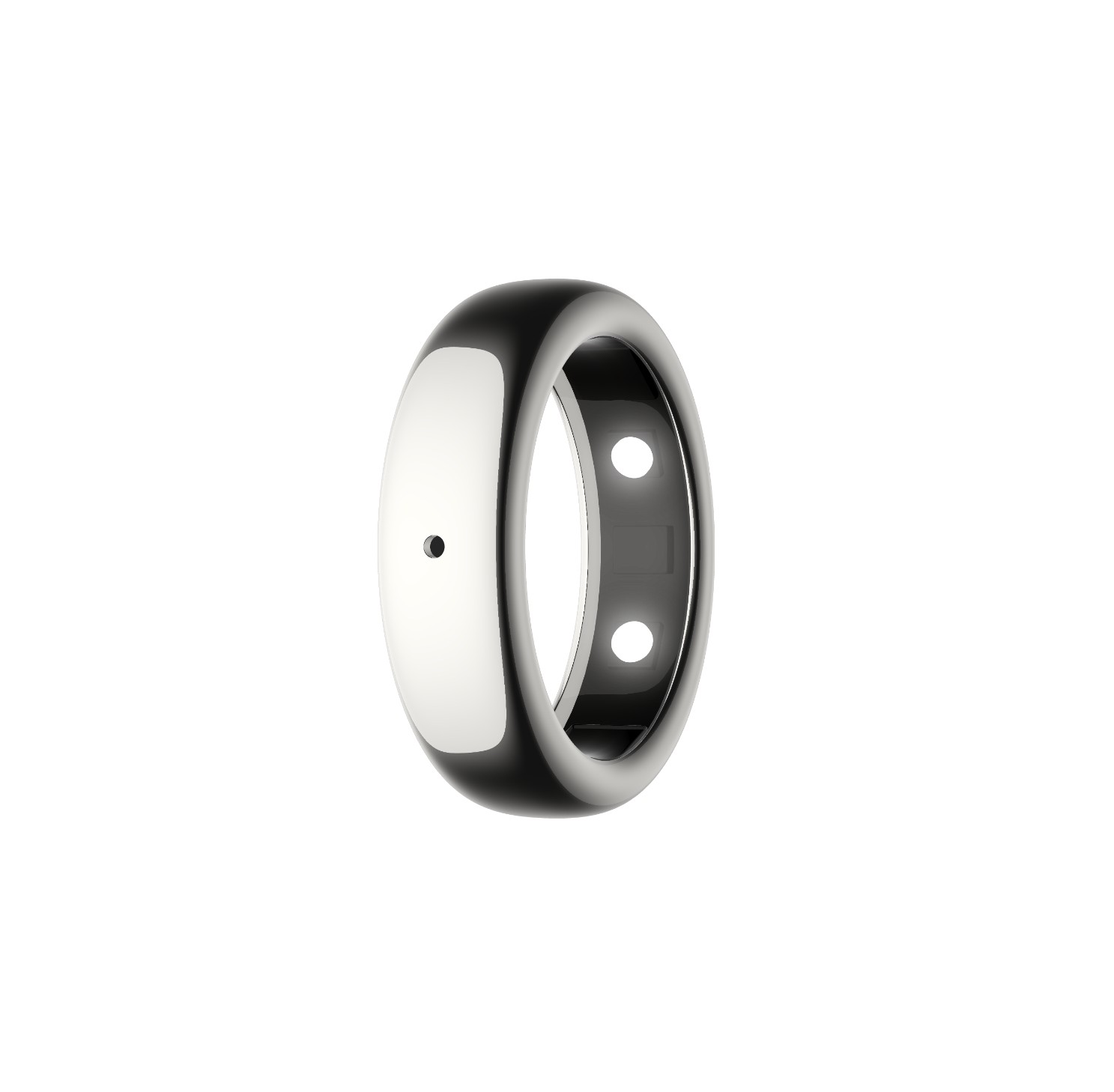
Cold-rolled and polished 316L stainless steel frame is treated with a DLC PVD coating to achieve a warm silver shade. The electronics are encrusted in a non-allergenic transparent BPA-free polymer.


When reimagining text input for these new computers, voice was the obvious choice. But speaking aloud is not private and can be uncomfortable. So for "private text input" I invented a new interaction - whispering to your ring as if you were telling a secret to someone.
N°2
Amulet
The Amulet is the second stage of immersion — a magnetic brooch and pendant system designed to be worn on clothing and the body.
It is a fully functioning computer: camera, spatial microphones, ToF sensor, speaker, and a projector that casts visual information onto the palm. Yet it is deliberately limited, giving the wearer a choice to be less immersed. The pin and clip attachments allow it to be worn on virtually any clothing.
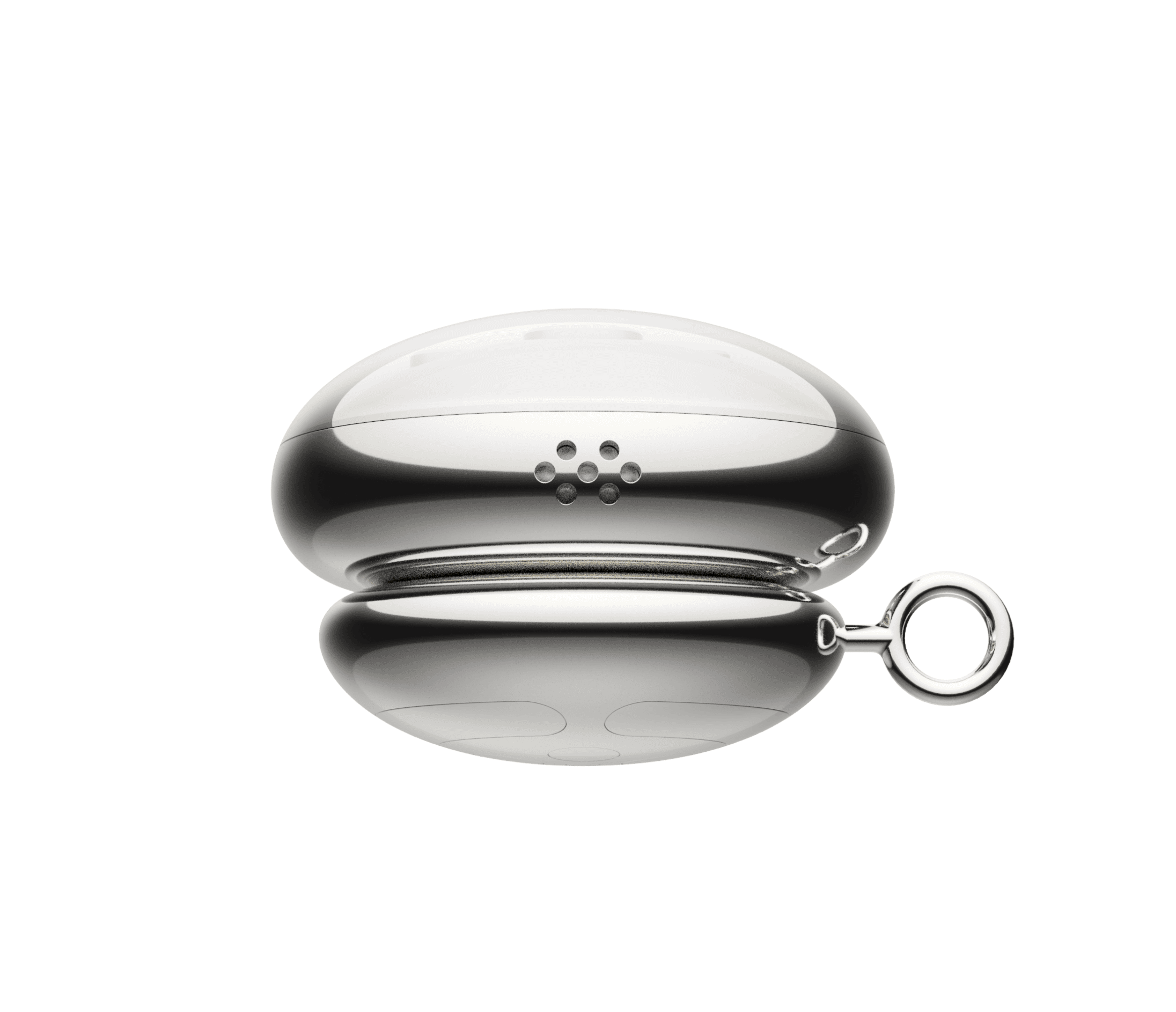
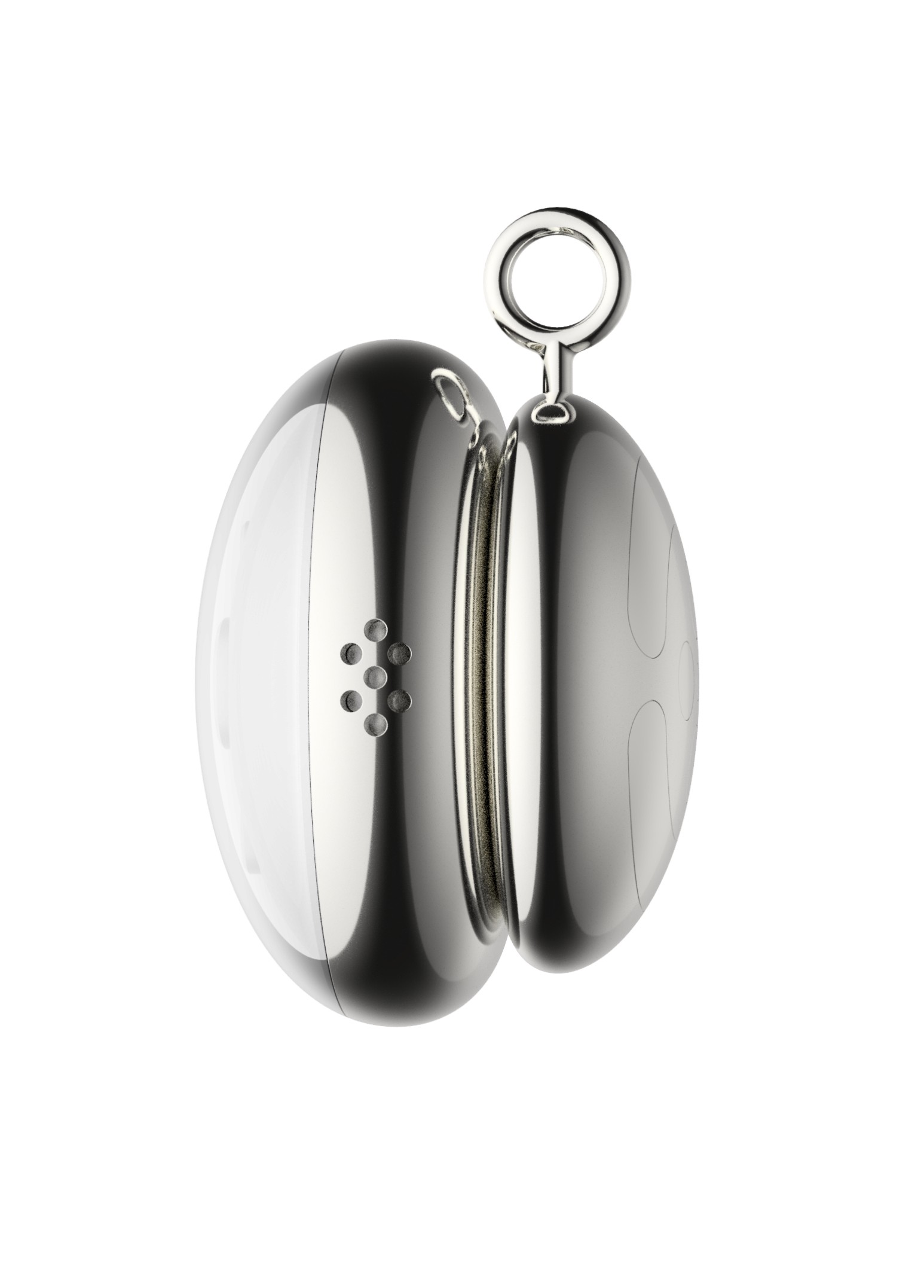
A semi-silvered aluminum oxynitride dome protects and disguises the camera, time-of-flight sensor, and projector system. The camera is hidden because many people feel uncomfortable seeing a worn camera pointed at them.

An amulet has since ancient times meant safety — an object that protects from evil spirits and radiates divine energy.


The clip, pin and pendant attachments allow Amulet to be worn on virtually any clothing.

The Amulet is the only computer in the system whose outputs — projected visuals and sounds — can be shared with more than one person.


Components:
Wide-angle camera, ToF (Time-of-Flight) sensor, MicroLED projector, System-on-Chip (SoC), microphones, speaker, solid-state battery, electromagnetic coils, haptic motor, accelerometer, gyroscope, heart rate sensor, barometer, pressure sensor, always-on altimeter, compass, SpO2, temperature, sweat & odor sensors.
N°3
Glasses
The Glasses are the third and deepest stage of immersion.
I resisted Glasses for months. Of the three devices, they pull the wearer deepest into the digital — the very thing this project argues against. But after extensive conversations with designers and potential users, one thing became clear: they were inevitable. If the system is to fully replace a desktop computer, it needs a device that covers the full field of view.
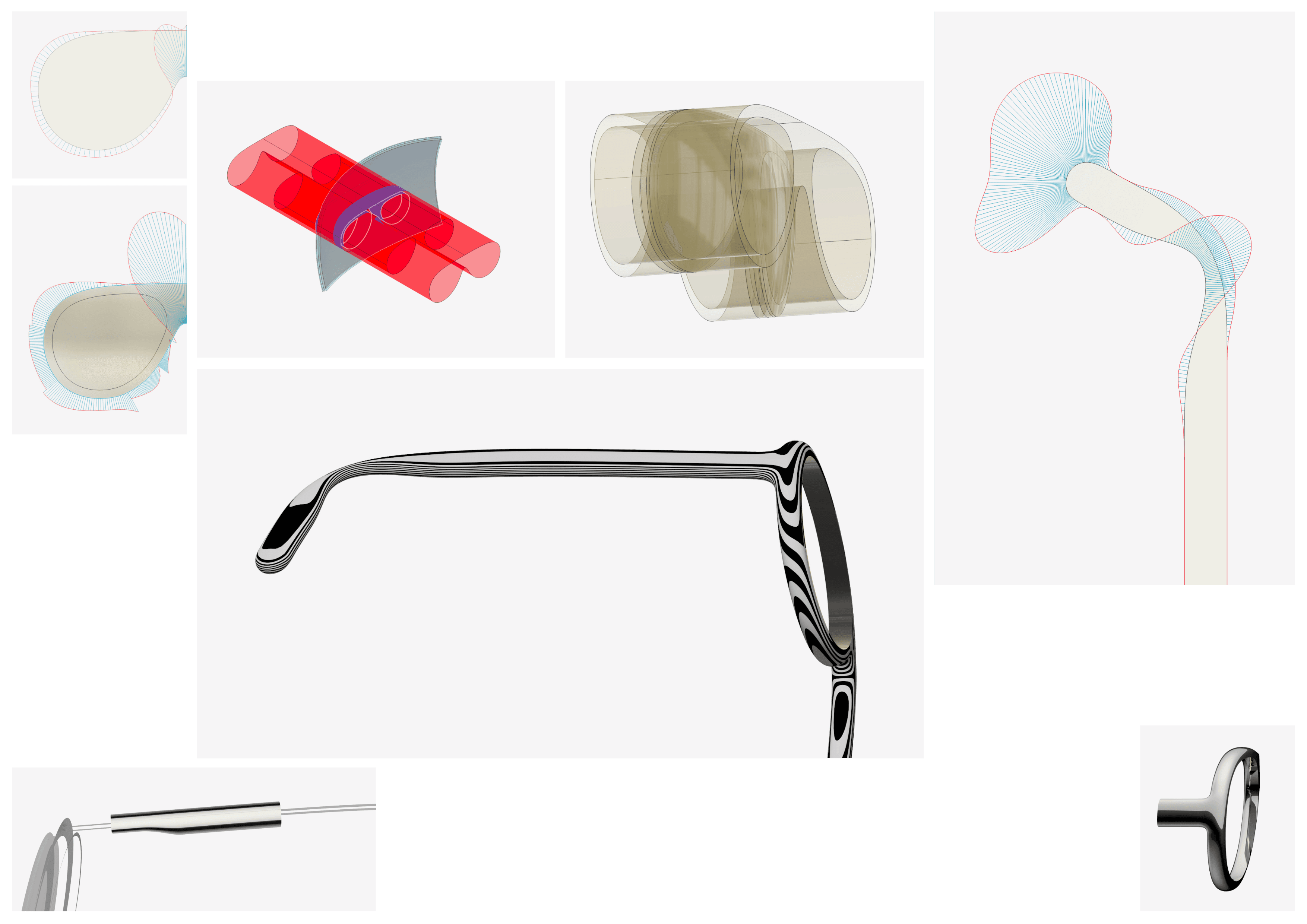
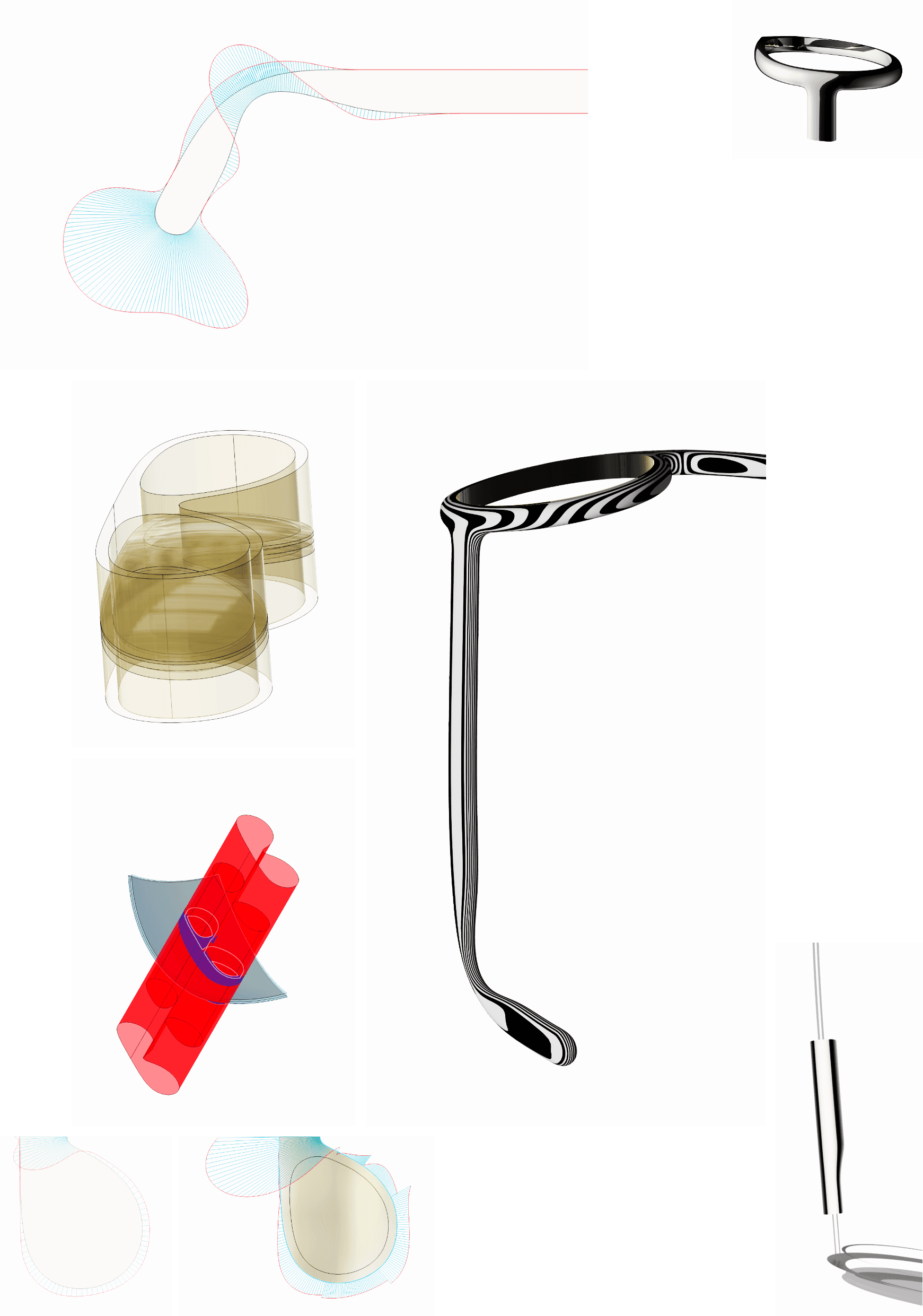
Smart glasses cannot be made like traditional glasses. Internal components demand a larger physical volume, which means not every lens shape can become smart. Rather than imitating existing frames, these Glasses define an archetype — a new typology, deliberately distinct from traditional eyewear.
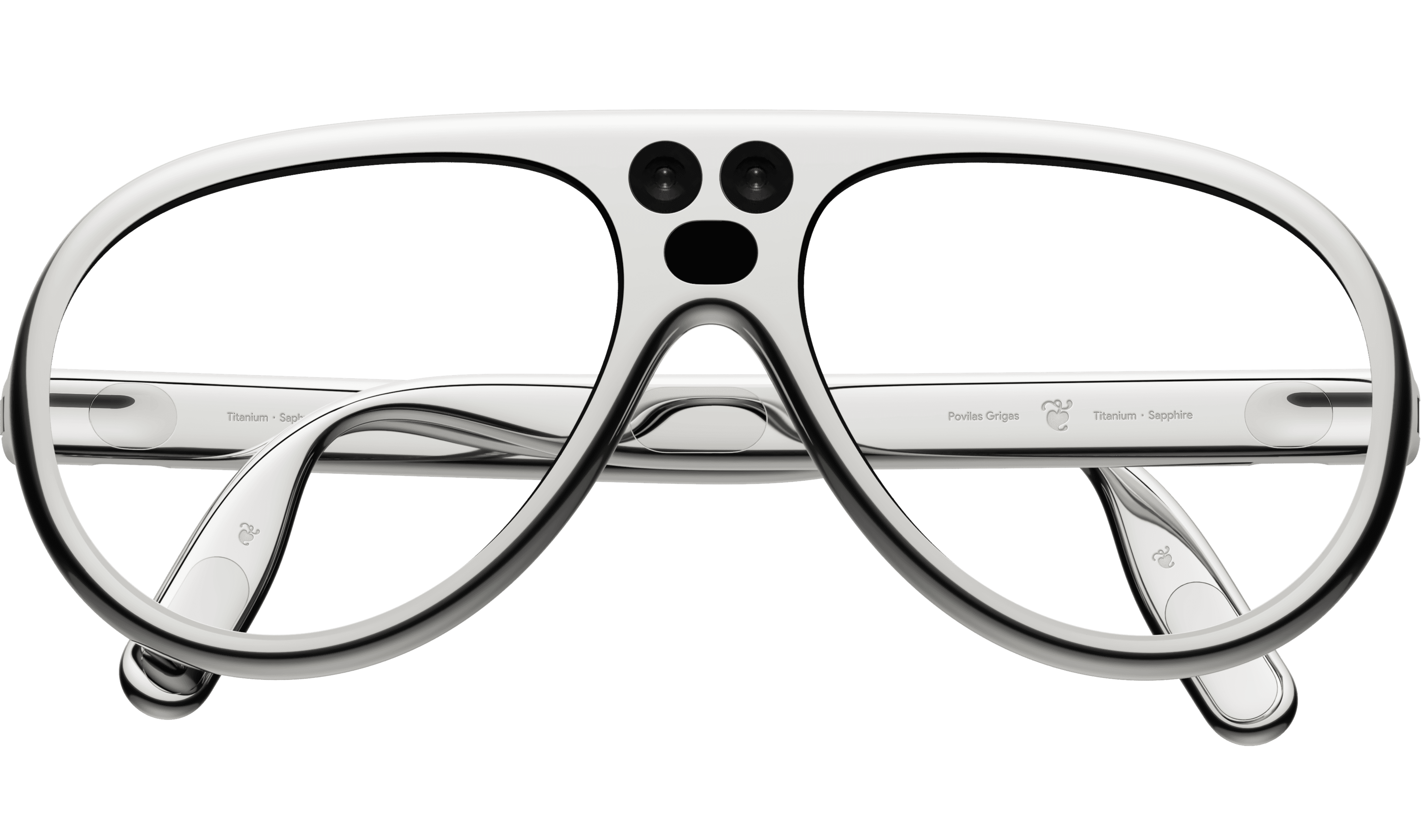

The Glasses' silhouette closely follows the shape of the orbital face bones and therefore covers 90% of the entire field of view of the human eye. Vision sensors are housed in the bridge of the frames to offer a centered POV.
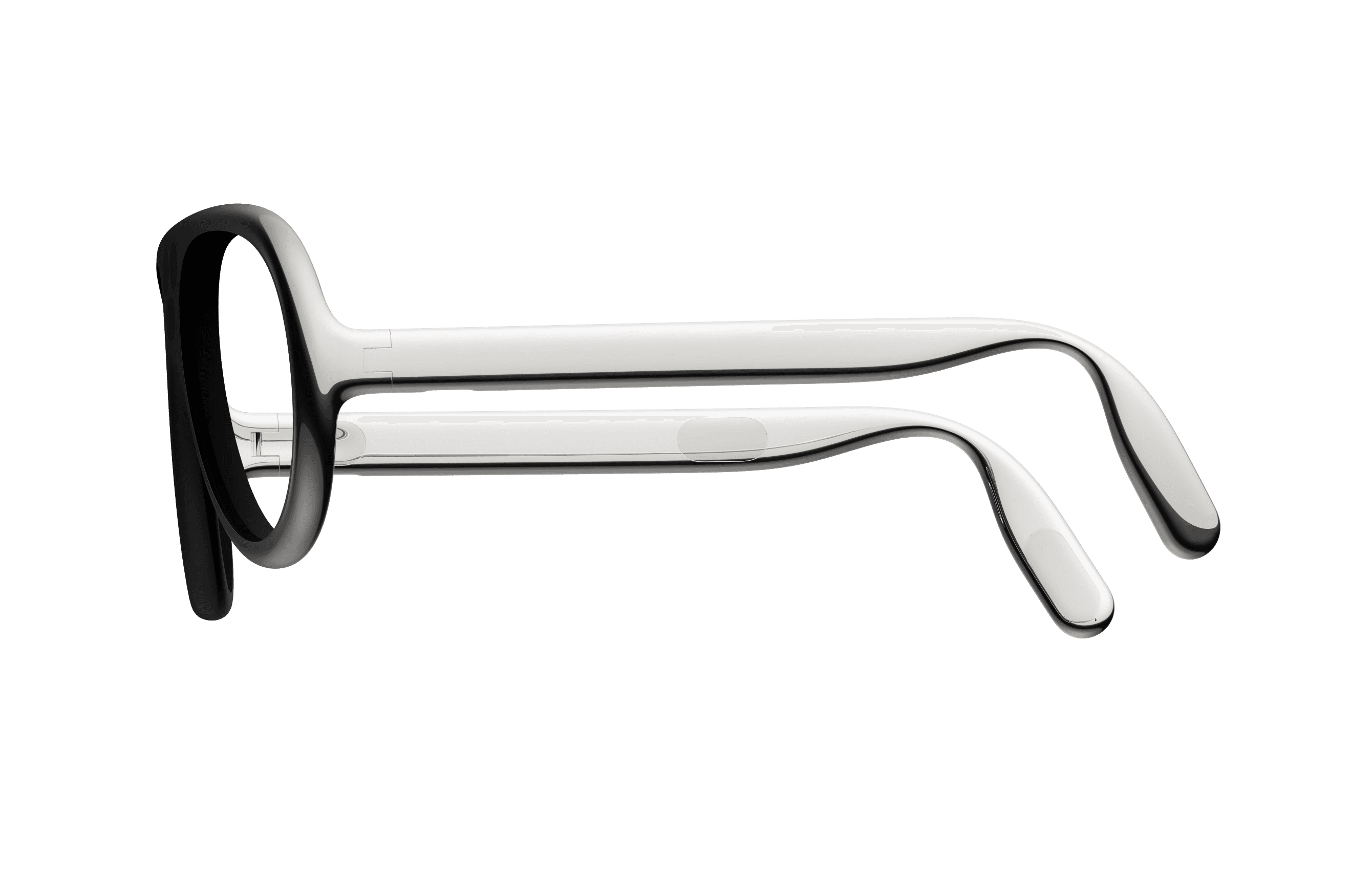
The CNC-milled and polished grade 5 titanium creates an exceptionally strong and light frame. The lenses are precision cut and optically polished sapphire crystals for incredible scratch resistance.
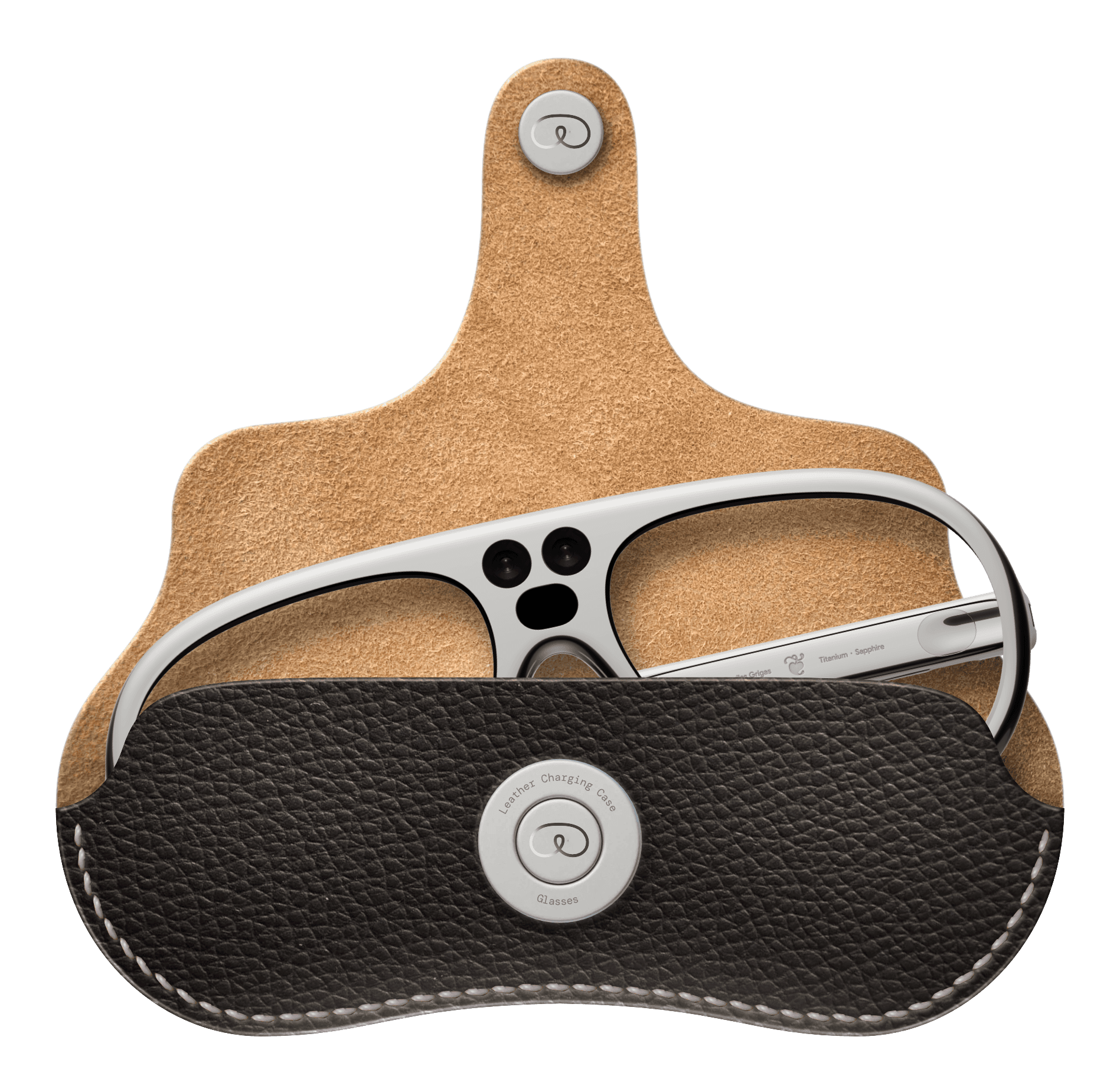
When not in use, Glasses fold flat into a handcrafted leather charging case designed to easily slip inside a pocket.
Home
Charging Plank
The Charging Plank is a deliberately stationary object that encourages people to, upon returning home, set aside their wearables and be present with their loved ones.
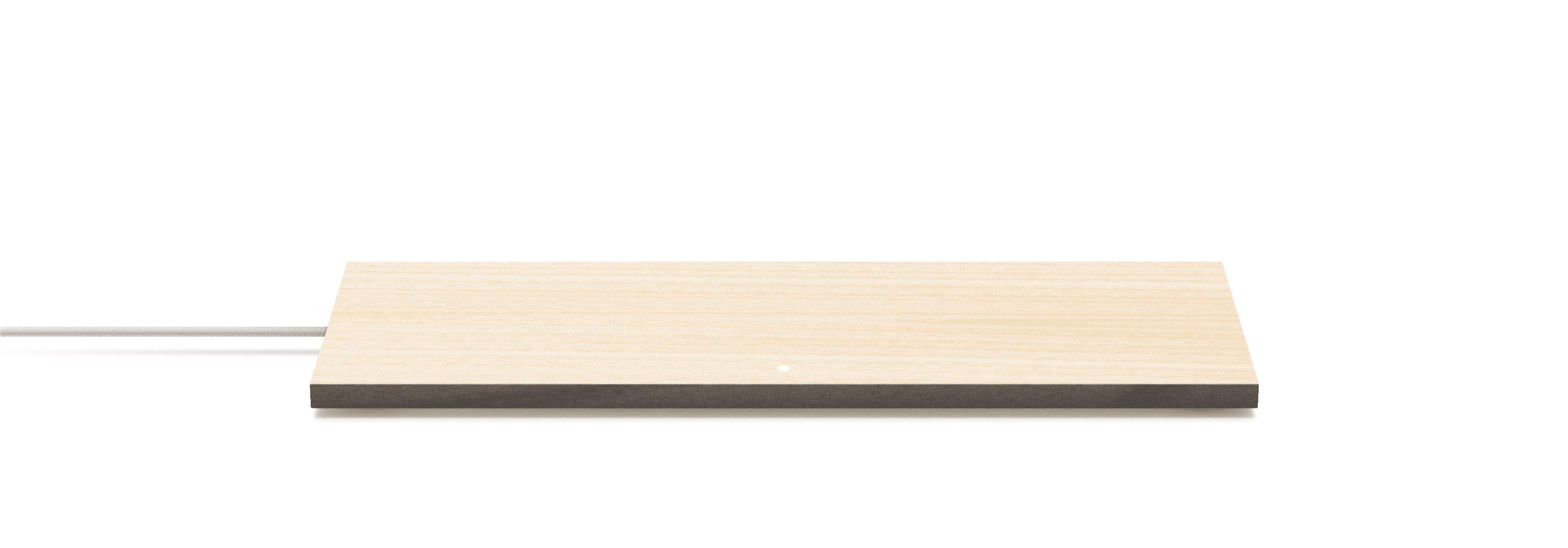
a study by Japan's Forestry and Forest Products Research Institute found that touching wood with the palm calms prefrontal cortex activity and stimulates the parasympathetic nervous system — inducing physiological relaxation more than other materials.
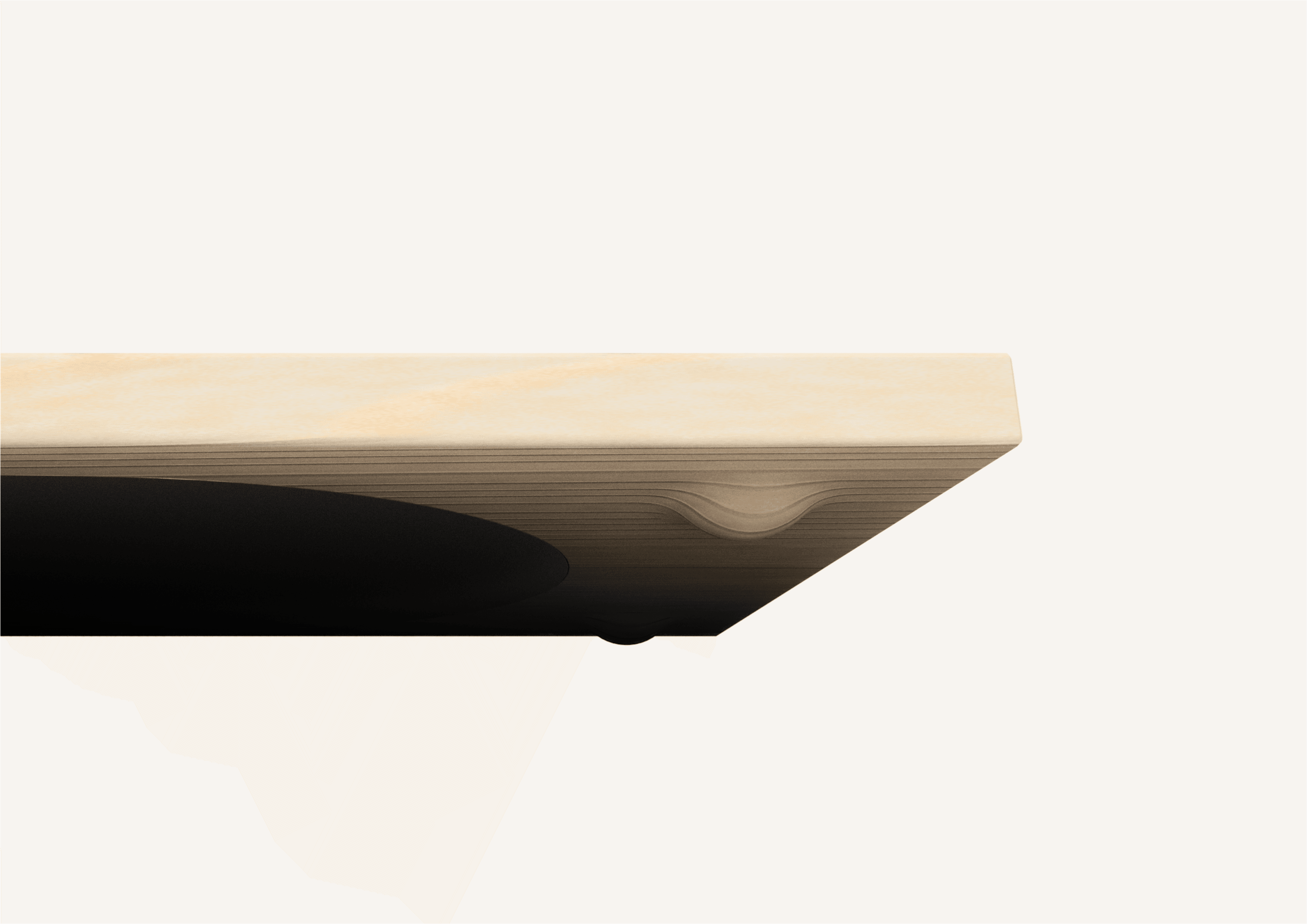

The 4 feet are CNC-milled from a solid piece of hinoki. They creating an air gap at the bottom for convection, while the stainless steel plate at the bottom increases thermal mass and helps dissipate heat from the electromagnetic coils inside the board.

The Plank is made of wood because its context is the home. You touch it when you put your devices down, it calms you. The material itself participates in the act of letting go.
Apendix N°1
Interaction
These computers do not have traditional input devices — no screen, no keyboard, no mouse. They use the environment and the human body as input, and with the help of AI, are contextually aware. Gestures are a central part of the interaction.

Scenario · Time management

Scenario · Memory

Scenario · Navigation & Travel

Scenario · synchronous & asynchronous communication
Apendix N°2
Research
The human-computer interaction paradigm established more than 60 years ago was defined by the technological limitations of its time. User interfaces today have hardly changed, because computers themselves haven't fundamentally changed. These wearable computers are designed to break that pattern.


to find love,
belonging,
understanding
and peace.
in products or in life.
write to me.
povilas@grigas.co